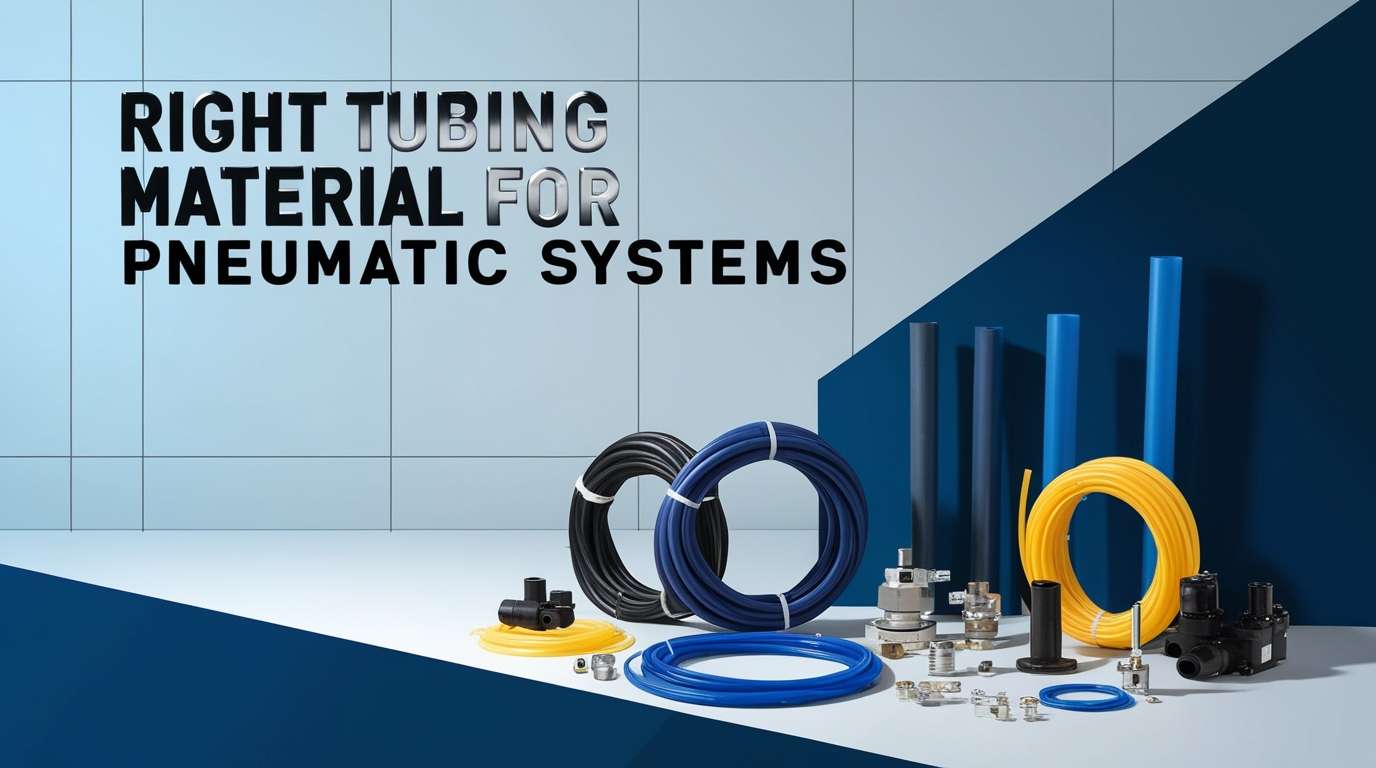
Pneumatic systems use compressed air in tubes to operate equipment and tools. The tubing material directly impacts the system performance, safety, and durability.
Using the wrong material causes leaks, pressure loss, and equipment failure. Knowledge of various types of tubing and their properties can be used to develop stable pneumatic systems that perform effectively over the long term.
Basic Function
Compressed air is pumped out into a pneumatic tube that leads to the place of operation. It attaches air compressors to cylinders, valves, and equipment. The tubing should be capable of holding pressure without leaking and be flexible to be fitted into any installation.
Pressure, temperature, and chemicals affect different materials differently. A given material may take years in one environment but only a few years in another. Proper selection of tubing will prevent costly failures and improve system efficiency.
Polyurethane Tubing
Polyurethane can work under normal factory-floor conditions, and wear cannot be caused by moving machinery. This material cuts at temperatures between -40 and 60 °C. Polyurethane tubing is the type that rebounds almost immediately upon bending and is thus good to use in films that involve frequent motion.
Nylon Tubing
Nylon does not have poor chemical resistance, unlike polyurethane, and is more resistant to high temperatures. Most of its formulations have a working range of -40 to 80 degrees Celsius. Polyurethane is not as rigid, and hence it is more useful in connection that requires high rigidity. This is a material that does not withstand many oils and fuels.
Polyethylene Tubing
Polyethylene is less expensive than other materials and can be used in simple applications. It works with medium pressures and temperatures. The substance is resistant to many chemicals, though it becomes brittle at extremely low temperatures. Polyethylene can be used in basic pneumatic systems with no severe requirements.
PVC Tubing
PVC is a flexible, economical material. It works under normal pressures and is resistant to most chemicals. Nonetheless, PVC is stiff at low temperatures and soft at high temperatures. This material is most effective in indoor controlled settings.
Knowledge of System Pressure
Check the highest pressure that your pneumatic system can pull. The majority of the industrial systems run at 80-120 PSI. This pressure should be able to be dissipated in the tubing at some margin.
Safety Factors
Use tubing with a minimum rating of 50 percent higher than the operating pressure. This buffer accounts for pressure spikes and material aging. Those tubing systems that run at 100 PSI should have 150 or higher-rated tubing.
Operating Environment
Estimate the temperature range at which the tubing will be placed. Outdoor systems have larger temperature variations than indoor installations. Specific attention should be paid to the areas around heat sources.
Material Limits
Each material has certain temperature limits. When these limits are exceeded, the result is hardening of the tubing, cracks, or softening. Some materials are brittle when subjected to cold, and others disfigure and lose shape when subjected to heat.
Record every chemical, oil, or cleaner the tubing comes into contact with. Hydraulic fluid, cutting oils, or cleaning agents are often present in manufacturing areas. Sanitizers and acids are used in food processing plants.
Material Compatibility
Compare your environment with each material in the check compatibility chart. Even infrequent contact is damaging in the long term.
Installation Requirements
Flexible tubing is needed in tight spaces and complicated routing. Rigid materials are more efficient in straight runs and fixed installations. Inquire into the extent to which the installation requires bending.
Movement During Operation
Moving equipment must be tubed flexibly. Robotic arms and movable machinery demand highly versatile materials that retain their form after repeated use.
Wear Conditions
Tubing rubbing against surfaces in use does not wear slowly; it wears off. Tubing is exposed to friction at all times due to the moving machinery, vibration equipment, and high-traffic areas.
Material Durability
Polyurethane has the best abrasion resistance of the typical pneumatic tubing materials. Nylon ranks second. Poorly abraded metallic materials should be used in harsh environments with protective guards or sleeving.
Pressure and Durability
Heavy-weight walls have the capacity to withstand pressure and stand. Nevertheless, heavy walls are less flexible and heavier. Installation requirements versus balance pressure requirements.
Standard Sizes
Tubing is available in standard outside diameters and wall thicknesses. It is available in common sizes such as 4 mm, 6mm, 8mm, and 12mm outer diameter. The thickness of the wall is normally between 0.5mm and 2mm.
System Organization
Airlines can be quickly detected in different colors. Blue will denote the primary supply lines, and red will represent emergency shut-off circuits. Color coding helps minimize mistakes during maintenance and modification.
Material Identification
Different manufacturers use different colors depending on the material. This avoids confusion about incompatibility if one combines another type of tubing during repairs. Transparent or clear tubing enables one to see the airflow and contamination.
Initial Investment
The least expensive is polyethylene, and the special compounds are more expensive. Material cost is, however, not the entire expense. Installation labor and fittings are high costs that come before tubing.
Long-Term Value
The low cost of frequently replaced tubing is more expensive in the long term than the cost of costly materials that last several years. Compare the profit or loss on replacement and the lifetime of options. Add the cost of downtime analysis.
Sample Runs
Provide small test installations under representative conditions before investing in the whole system installation. Check the progress in a few weeks and identify any potential issues.
Performance Verification
Test pressure drops, leaks, and material changes. Make sure that the tubing can meet all anticipated conditions. Testing in large installations is done to avoid costly errors.
When choosing a pneumatic tubing material, several factors must be considered, including pressure rating, temperature, chemical exposure, and flexibility. Proper material selection saves a lot of time and leads to the development of pneumatic systems that deliver consistent results over the long term.
If you buy a conveyor for a job that is mostly point-to-point and spread across multiple floors, you can end up with a long line that is hard to route, slow to change, and expensive to expand. If y...
READ FULLPneumatic systems are pretty straightforward in design. Compressor. Regulator. Valve. Cylinder. Done. And then one cheap tube turns your tidy schematic into a leak hunt at 2 a.m. Tubing material is...
READ FULLPU sheets, or polyurethane sheets, are vital for protecting industrial equipment and extending its lifespan. These multifunctional materials are better, more resilient, and more wear-resistant, as ...
READ FULL